Showing posts with label flowers-and-plants. Show all posts
Sunday, June 9, 2013
Spring colors of steppe!
I was quite unlucky with weather during the bloom of these beautiful wild tulips in steppes this year. It was plain and boring from sunrise to sunset. At times very windy. When it was calm I was improvising with macro-photography. I hope that these pictures at least partially will show you how beautiful are the colors of spring steppes.
"In mid-spring, tulips (Tulipa shrenkii, T. biebersteiniana) bloom red across the low green hills of the Manych Valley. In fact, the tulips that are grown in Holland today and popular around the world originated from the Manych Valley. The first flowers first traveled to Turkey in the 17th century, where they earned the name of the Turkish tulip, then went on to conquer Europe and the world. Yet, the Shrenk’s tulip is highly endangered in its place of origin.
Tulips flower on a green backdrop of fescue (Festuca valesiaca) and feathergrass (Stipa lessingiana, S. capillata, S. ucrainica, S. pulcherima) steppe communities, which make up the majority of the plant cover in the zapovednik. Islands are covered with tall grasses and flowers with purple, pink, yellow, white, and red blossoms. Hair-like feathergrass (Agropyron pectinatum), sea lavender (Limonium sareptanum), and sagebrush (Artemisia austriaca) are common in valley steppe habitats, while low shrubs (Kochia prostrata, Artemesia lerchiana, A. pauciflora, A. santonica) are found in drier areas. Austrian flax (Linum austriacum) is common in areas. Patches of desert are found in places that were subject to overgrazing or other human impacts.
Two species of feathergrass (Stipa zalesskii, S. ucrainica), Shrenk’s tulip, and meadow saffron (Colchicum laetum) are some of the endangered plants in the reserve listed in the Russian Red Book. In all, there are 384 species of vascular plants in the zapovednik, representing 54 families. "
Source: http://www.wild-russia.org/bioregion3/Rostovsky/3_rostov.htm#sect1
Original post: http://shpilenok.livejournal.com/182602.html
Sunday, April 21, 2013
The first environment-oriented tulip festival in Kalmykia (Russia).
Yesterday morning was cold, windy and uncomfortable. The sun only appeared for a minute at the sunrise and hid in the clouds for the rest of the morning. I was crawling between the tulips in the morning frost, looking for inspiring view, but all in vain. Cold and tired I was going back to my home on wheels...
And as I reached it I found a surprise!
Several more photos from The first environment-oriented tulip festival in Kalmykia (Russia)..
Today is April 21, 11th day of expedition. Photos taken yesterday.
Originally posted at http://shpilenok.livejournal.com/181279.html and http://shpilenok.livejournal.com/181753.html.
Friday, April 19, 2013
Kalmykian steppe.
Steppes are open, there is no shelter for a human or animal. It is a not an easy place to live. At nights it's freezing cold, and during the day, the heat of sun is interlaced with cold winds.
Above is a photo of local shepherd. Below is this morning view, full of tulips.
Today is April 19th, day 9th of my expedition.
Originally posted at http://shpilenok.livejournal.com/180756.html and http://shpilenok.livejournal.com/181116.html.
Thursday, November 3, 2011
Monday, October 17, 2011
Wednesday, September 14, 2011
Wednesday, August 24, 2011
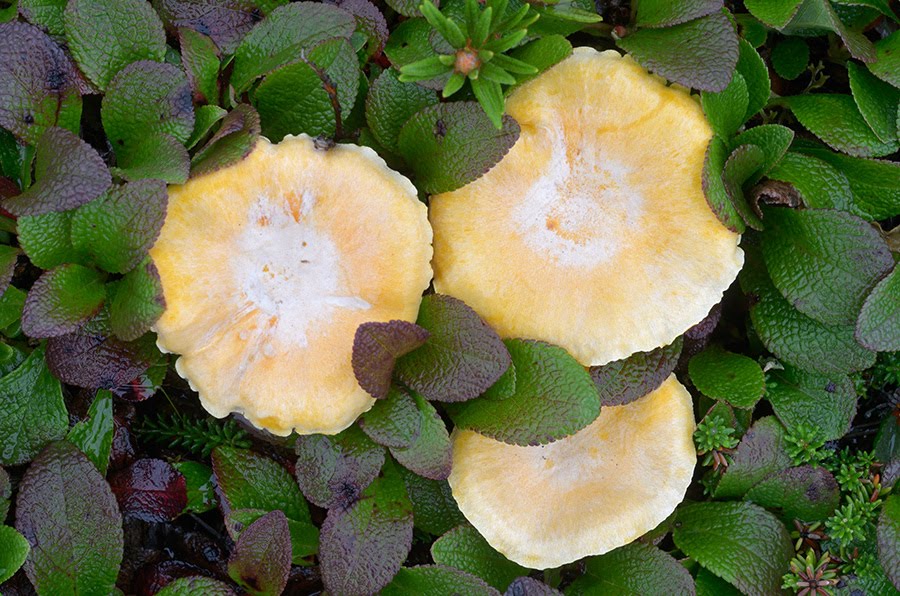
"Little foxes"
These mushrooms are called chanterelle in English, but in Russian their name is "little foxes". Can you see why?
Here my little fox friend, Alisa, is eating delicious bog bilberries.
Originally posted
Labels:
flowers-and-plants,
foxes,
Good-morning,
kamchatka,
Kronotsky-reserve
Location:
Kronotsky, Kamchatka Krai, Russia
Tuesday, August 23, 2011
Autumn spirits.
Just several days ago it was crowded at my ranger station: family, colleagues, research staff. And now I'm alone again.
Just several days ago it was summer here. And now it is the beginning of northern autumn: first snowfalls in the mountaintops, first red and yellow leaves in tundra, flocks of birds gathering for migration.
Even the air tastes like autumn too, filled with smells of dry grass and mushrooms.
Originally posted by
Monday, August 15, 2011
Almost sunflower fields.
Good morning from Kronotsky Nature Reserve!
We are resting from bears, foxes, and... I was about to say "from fogs", but that wouldn't be true. The fogs are here every day, including today.
The banks of Kronotskaya River are painted with these bright flowers for several weeks now. For myself I call them sunflowers, but technically it is a subspecies of ragworts.
Originally posted by
Saturday, August 13, 2011
Too much to eat?
Our local bears, who just recently were so fit and slim, have got the bellies now, similar bear bellies, - it is the season of readily accessible food abundance.
Today on of them have stopped by on a helicopter landing ground near our ranger station. Apparently he thinks that crowberries are tastier here, even though they are covering everything around, I haven't ever seen a harvest as heavy as this year! In some places several layers of the berries are laying on the ground and it is difficult to walk: the "carpet" is too rich. As I walk I can feel how hundreds of berries explode under the soles of my shoes.
From a single point it is easy to gather a medium basket to eat, and you won't even need to move around. I am wondering if volcanic ash from Kizimen eruption this winter have such a wholesome effect on the soil...
Originally posted
Tuesday, August 9, 2011
Mosquito eaters.
Good morning from Kronotsky Nature Reserve!
I got really annoyed by mosquitoes today, they were chasing me everywhere and finally made me run back to the station. So the choice of today's photos was easy - this is drosera, commonly known as sundews. This carnivorous plant feeds on mosquitoes and other small bugs by gluing them to its leaves with special trapping and digestion mechanism. Various species of drosera can be found growing natively on every continent except Antarctica (more in Wikipedia).
Sundews and cranberry flower.
Originally posted
Sunday, August 7, 2011
A feast before departure.
Originally posted by at Доброе утро из Кроноцкого заповедника! 
Good morning from Kronotsky Nature Reserve!
From the beginning of August large flocks of woodcock-berry-pickers arrived here. The tundra is full of simple whistles melodies every sunrise. These birds are fattening on rich local berries before continuing their migration south. The crow-berries are especially plentiful this year.


Good morning from Kronotsky Nature Reserve!
From the beginning of August large flocks of woodcock-berry-pickers arrived here. The tundra is full of simple whistles melodies every sunrise. These birds are fattening on rich local berries before continuing their migration south. The crow-berries are especially plentiful this year.
Wednesday, August 3, 2011
Another wonderful start of the day!
Originally posted at Доброе утро из Кроноцкого заповедника! 
Good morning from Kronotsky Nature Reserve!

Good morning from Kronotsky Nature Reserve!
Subscribe to:
Comments (Atom)