Showing posts with label life-in-taiga. Show all posts

Saturday, February 23, 2013

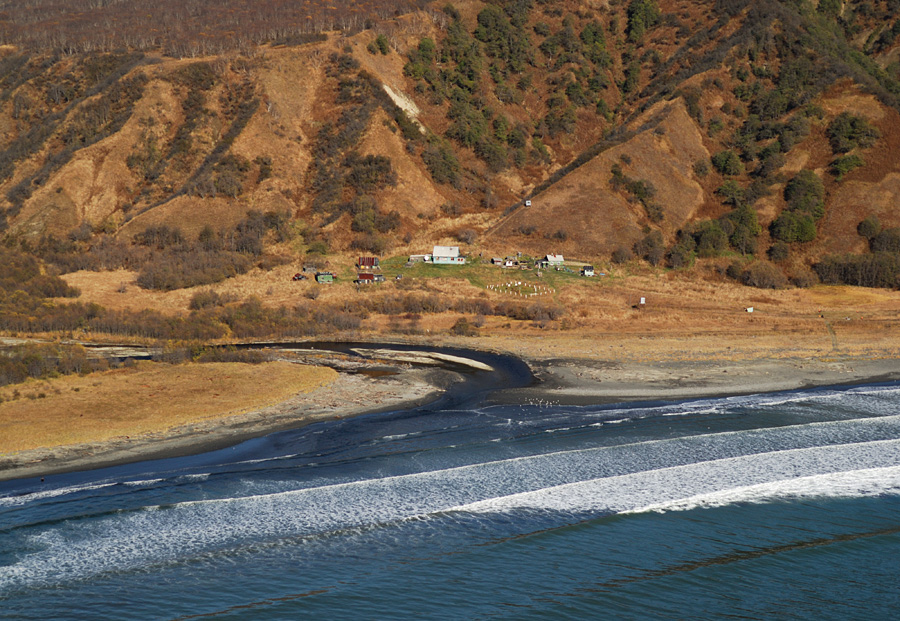
Abandoned settlement "Kronoki".


In winter.


And in fall.

In the middle of last century this town was very busy. There was seismological base here, military base, Kronotsky Nature reserve station. Many expeditions have started from here. The buildings have extended for a mile and a half along the coast line. Nowadays only ranger and weather station are active, the rest is abandoned. The Nature reigns here, and humans are only present to observe.


Saturday, October 27, 2012

We, humans, live behind the fence over here...


... while the bears have their full freedom outside. Every day many of them come to the fence to observe our life and bring their yougsters. At these moments there is a queer feeling as if we are living in the zoo...
This electric fence is designed for cattle, but it works very well with bears, and it makes our life relatively safe in our bears' kingdom.


originally posted at http://shpilenok.livejournal.com/

Monday, October 8, 2012

Helipad at the daybreak.


The night is full of sounds here at my ranger station: waves lapping on the lake, distant waterfalls, the bears' sighs from nearby bushes, my colleagues snoring from their cabin... Do you think the bears were having a dance party all night at our helipad?

Оригинал взят у в Вертолетная площадка на рассвете.

Monday, September 24, 2012

Settling at a new place.

_DSC3783

In the center of the picture is the Grassy Cape with a ranger station and a visitor station on it.

Yesterday I arrived at my new place of work. Actually, it is a old new place, because in the past years I spent many months working as a ranger on the Kuril Lake in Southern Kamchatka Wildlife Refuge. I've in different parts of the Refuge in different seasons. Here in my blog I published many stories about this place and even wrote a photo-book about this lake. My colleage and very talented photographer, Alexey Bezrukov, wrote a lot about this lake too when he spent two years here with his family also working as a ranger. I bet that both Alexey and his wife Tatyana are missing local bears on their new assignment on the Baikal Lake.

The ranger station at the Grassy Cape is my favorite place on the Kuril Lake. This place has the highest density of brown bears in Russia. During this year there were over a thousand bears recorded around the lake. Even with my own eyes I've seen over a hundred of bears per day on many occasions. Even today I've seen at least couple of dosens of them from the window. Therefore in the coming weeks prepare yourself to see many bears in my blog!

How did I end up coming here to work? Well, the tourists season is coming to an end. The season of bad weather is coming. The rangers who work here are going to take vacations during this time. Fall with it's «nasty» weather is my favorite time of year. So I am taking this opportunity to substitute unti the winter comes. In addition to being my favorite place during my favorite weather, this ranger station has the fastest sattelite internet setup in the whole park. That means that you will learn about the local wildlife news in real time!

_DSC3837
On this picture you can see the whole station: on the left there are two ranger houses. The larger building to the right is a hotel for visitors. All the buildings are connected by wooden trails. The green square is a helipad.

Thursday, July 7, 2011

My little local mink-"alarm-clock".

Mink on land and in water.

This little animal has made his home just outside my cabin. Thanks to him I never missed a sunrise - right around 3:50am every day this little mink starts his morning routine making a gentle noise around. Just enough to wake me up. It is slightly too early, but on the other hand the early bird catches the worm!


You can view the Russian version here..

Sunday, June 12, 2011

Current situation with my local bears.


For several days I will be out of reach from the sattelite internet, I am going for a long patrolling trip to check the situation on distant ranger stations. My backpack is packed and is waiting for my on the porch. Just now I closed all the shutters in the windows and enforced them with wooden boards. This is not an excessive safety measure, I have troublesome neighbors around. And I wanted to tell you about them today...


Original post in Russian here.

Thursday, June 2, 2011

It may be really bad for my health...


... to laugh so hard at foxes today! :)

On the photo my nearest neighbor, the fox I name Cosmo, is investigating the smell that Mr. Evildoer left on my photo-gear.

Original post is by Igor Shpilenok (both text & images) in Russian here.

Monday, May 16, 2011

Suzemka's boyfriend. The transient passion.


Several days ago Suzemka brought to my station her first boyfriend (he is on the left on the picture). This admirer is even slightly shorter than her, his fur is in pathetic condition with some hairless patches, and he is constantly scratches himself. I am seriously concerned about our young beauty health with such a boyfriend!

Now the mating season is just starting for the bears, the culmination of bears' "weddings" will happen only in June. But the female bears has already lost their usual distrust and aggression towards the males of their kind, and became very playful.

I got partially involved into bears' love affairs this year. And even though I almost accepted the clumsy appearance of Suzemka's choice, and even decided not call him "Clumsy" (not to offend), but just neutral "BoyFriend" instead, still, my short sleep has became even shorter nowadays. As if they are on schedule, at 3:50 am, even before the twilight the clatter of bears' feet wakes me up. In a mating chase Suzemka makes circles around our house and "Boyfriend" is following her. This is natural, this is how females ensure that the chosen male is healthy and will be a good father for the future generation.

So Boyfriend is chasing Suzemka all across the land, but if she goes in the cold waters of nearby river he gives up and waits for her at the river bank. After such a chase they usually eat fresh grass that just appeared along the river. The most grass is right next to my station. The well-educated Suzemka understands that the yard - is my territory, and that it is not polite to come to the human closer than 30 yards. But this uncouth hooligan thinks that it looks cool if he scratches his back against the corner of my not-so-sturdy and quite old house! Still sleeping at these times student-volunteer always thinks that the shaking is caused by an earthquake. Apparently, "Boyfriend" thinks that by leaving droppings near the storage unit or sleeping by the toilet door (especially when it's mostly needed) he will impress Suzemka with his courage! Yesterday we even had to use a flare to scare him away. Hopefully he will remember the lesson!

It's time for the first green grass around here.

Psychological portrait of "Boyfriend". The direct stare means a challenge in animal language.

I do not understand: What did she find in such a "macho"?


I strongly believe that this "Boyfriend" is a temporary thing. Very soon the mature and heavyweight bears will come into play. On this picture it is our old acquaintance, Robinzon, who also lives nearby on a river island. He does not hurry to start the mating games, but when the time is right (when the females will have their ovulation), the males similar to this one will chase away all the youngsters and will be the fathers' of future cubs!


Original post is by Igor Shpilenok (both text & images) in Russian here.

Saturday, May 14, 2011

A dream to come true... :)


Do you remember how did you celebrate your twenty-second birthday? My intern-volunteer Alexey will remember his for a long time. On the picture he is inside the Suzemka-bear's den in which she spent seven winter months hibernating (this is how it looked when she just came out). Alexey, whose college major is computer graphics, has made all the nessesary measurements inside, so very soon we will see a 3D model of the den.
---
Original post is by Igor Shpilenok (both text & images) in Russian here.

Saturday, May 7, 2011

Kronotsky jet-fuel sniffers.


What does this bear want from the helicopter?


The animal is waiting for the people to take off for several drops of fuel that will be left on the landing area. The bear will spend a long time sniffing into the smell and will even roll on his back on the ground there. After a while he will dig a hole in the ground, lay down in it with his belly up to the sky, and will stay for a while in this "nirvana" position.

Just like this one, who is already done with his sniffing.


Last helicopter has brought to my station not only the intern, Alexey, but also several barrels of fuel to be used in a power generator. Before we had a chance to secure the barrels near the house, the local female-bear, who I call Suzemka, became interested in them. Apparently, she is facinated by the smell of fuel!


In this last picture, my new intern, Alexey, has caught the moment of photographing the bear. (c) Alexey Matveev.

Original story and photos are posted by Igor Shpilenok in Russian here.

Tuesday, April 12, 2011

Warm, calm and cloudy.


It is warm and cloudy today. Large packs of crows are pecking last year's berries in tundra. The largest pack has 63 birds in it! I have a feeling that nothing will be left for other animals after their feast.

The only snowdrifts left are in the shade of my cabin, but even they are thawing away. The weather forecast for tonight says that the strong cyclone is coming with mix of rain and snow, and strong winds. I am worried about Steller's sea eagles - they are already hatching in their enormous nests. In the radius of two miles around my ranger station three nests are occupied. Let's hope that these birds have adapted well to the spring storms.

And I have prepared myself for the storm as well: I brought enough water from the river and firewood for three days. I don't know how the satellite internet will work - it is sensitive to precipitation.

Originally posted by at Доброе утро из Кроноцкого заповедника!
 

Monday, February 7, 2011

Mr. Sneaky Evildoer.


This is Mr. Sneaky Evildoer. He lives near the Bogachevsky-Kronotsky estuary, in the best place there can be for the happy fox life. Abundance of fish, swans, ducks around makes the life easy. All the foxes of the Kronotsky Nature Reserve would love to live here… But Mr. Evildoer does not allow them. He is a dominant male, the strongest and the smartest of local foxes, so he imposes his will on others.

Sometimes he tries to dictate his wishes to people. As for me, he does not allow me to stay overnight at the ranger station at the estuary. How does he manage to achieve this – I’ll tell you later, especially if I will be lucky enough to photograph his evil actions.

But the story with me - it’s nothing compared to what Mr. Sneaky Evildoer did to special task force team of the reserve! These men are the elite of the Kronotsky reserve protection force against poaching and other violations. They can live in the snow holes for weeks. On tiny boats they go into the open ocean during storms. They capture armed poacher gangs at night. Tough guys, bears always give them right of way when their paths meet… But Mr. Evildoer did not like it when they appeared at the station in the estuary. While the boys were cooking dinner inside the cabin, the fox has disappeared with … their weatherproof gore-tex boots. He did not take all of them, just one shoe from each person’s pair. Those boots were never found!

Original post is by Igor Shpilenok (both text & images) in Russian here.

Tuesday, January 11, 2011

More about insomniac bear...

Originally posted  at О шатуне подробнее...


We often idealize nature. In reality there is a lot of cruelty in wildlife that contradicts acceptable human morality. But all of it makes sense if you look from evolutional perspective. The harsh winter time in the north is especially cruel. I was shocked when I first found out as a kid that nine out of ten tomtits do not survive in the winter in the area where I grew up.

Sometimes even humans share this tragic experience of being a prey, and it is good when we have the possibility to fight against a possible predator. I have had such an experience in 2008 winter that I spend on a river Tikhaya in Kronotsky Nature Reserve.

But first I should tell you more about the weapons I am using. When I was living and working in the “Bryanskyi Les” nature reserve, I never used any guns. I was fortunate to visit almost half of nature reserves of Russia, and nowhere had I needed weapons. But here, in Kronotsky Reserve I take a shotgun with me every time I step outside. I’m trained to do so. The brown bear population in reserve is the largest among the world protected populations. And among those bears, just as among people, sometimes you can meet an aggressive one.

On average I fire a shotgun once per year. I always load one barrel with signal flare and another with a 12mm bullet. A flare shot (I usually aim to the grown under the bear) sobers up the animal without hurting it. So far I have never used the bullets. I have to admit, that to carry a double-barreled shotgun all the time is not easy. A 12mm shotgun weights 7.7lb (3.5kg). A pair of waders (high waterproof boots), which is my main footwear – 6.6lb (3kg). A set of clothes – at least 4.4lb (2kg). My camera with three lenses in a camera bag and the lightest tripod weights 26.5lb (12kg). That means that every day I am carrying at least 44.1lb (20kg) with me.

Сначала я "экономил" вес поклажи на оружии. Как только в начале января последние медведи укладывались в берлоги, начинал ходить без ружья, радуясь легкости на плечах. Пока не повстречался с настоящим шатуном. Вдруг кто не читал комментариев к предыдущему посту: шатун - это медведь, который не сумел запастись жиром для зимовки в берлоге. Такое бывает из-за бескормицы, болезни или раны. Шатуны обречены на голодную смерть зимой.

Вообще-то, первый шатун, которого я увидел в своей жизни, был мертвым. В марте 2006 года мы приехали с коллегой на снегоходах в избушку в устье реки Лиственничная на Кроноцком озере, чтобы отсюда проводить зимний маршрутный учет. Но ночевать оказалось негде: окошко избушки было выломлено, нары и стол сломаны, разгрызены в щепки. На полу, среди разодранных матрасов лежал худющий мертвый медведь. Вытащить его промерзшее тело ни через дверь, ни через окно было невозможно.

Пришлось нам учеты проводить из другой избушки, не такой удобной. Мерзлый зверь тогда меня особо не впечатлил, и зимой я продолжал работать без ружья за плечом. До конца января 2008, когда я увидел на насте следы от больших когтей. Я был без оружия в шести км от избушки и собирался идти еще дальше, но сразу изменил свои планы и пошел домой, внимательно оглядываясь. Понимал, что это голодный шатун, и шуток не будет.

В полукилометра от избушки еще раз пересек совсем свежие медвежьи следы, и мне сделалось совсем неуютно. Но добрался благополучно, взял ружье и сделал круг радиусом в километр вокруг избушки, приглядываясь к следам. Нашел целую тропу у реки Тихая - оказывается, медведь жил рядом уже не мене суток… Зверь боролся за свою жизнь, усердно искал хоть какую-то еду, но ее не было в промерзшем лесу. Кроме меня...

Наша первая встреча состоялась на следующее утро. Еще в предрассветных сумерках я с ружьем за плечом и двумя бидонами в руках пошел за водой к реке, это метров 300 от жилья. Спустился с кручи; внизу, где снег был рыхлый, вступился в ожидавшие меня там охотничьи лыжи и пошел к светлеющей среди ольховых деревьев воде незамерзающей реки.

Мороз был под двадцать, лыжи визжали по жесткой лыжне, но я был настороже, и услышал, как от того места, где зачерпываю воду, донесся скрип снега. Я остановился. Снег скрипнул еще, и я увидел на фоне парящей воды сгорбленный силуэт зверя. До него было метров сорок. Я схватился за ружье, брошенные бидоны загремели на снегу и зверь привстал на задние лапы, опершись одной передней лапой на ольху. Стоящий силуэт попал на мушку ружья и с этого момента страх улетучился, моя голова начала работать четко, просчитывая возможные варианты.

Не спуская силуэт с мушки, я сошел с лыж, потоптал под собой снег, чтобы при возможных выстрелах оказаться в устойчивом положении. Можно предположить, что у медведя в голове в тот момент тоже просчитывались варианты и он принял один из них - опустился на все лапы, пригнул голову к самому снегу и, сильно сгорбившись, пошел ко мне прямо по моей старой лыжне, совсем не проваливаясь.

Я прицелился в снег перед мордой, но прежде чем нажать спусковой крючок ствола, который был заряжен сигнальной ракетой, поставил ногу на одну из лыж и толкнул ее что было силы по лыжне в сторону шатуна. Лыжа с морозным шорохом-визгом понеслась под легкий уклон на медведя. Вот этого он не ожидал! Это его почему-то страшно перепугало! Он перепрыгнул подъехавшую под него лыжу и галопом понесся мимо меня в плохо замерзшее болото, с грохотом ломая тонкий лед, проваливаясь в грязь.

Оказывается, ночью медведь несколько раз обошел вокруг избушки, пытался подкопать мерзлую землю вокруг туалета, исследовал мои вчерашние следы. Днем я его увидел в окошко избушки: он непрерывно ходил вдоль реки, вглядываясь в воду: наверно, помнил про летнее обилие красной рыбы, но река была пустой… Потом он перешел через тундру к океану и долго бродил вдоль бушующих волн, но ничего не находил. Несчастный был настолько исхудавшим, что его держал тонкий наст, на котором я сразу проваливался без лыж.


Я перестал покидать избушку в темное время суток. Днем же я не раз встречался с ним на берегу океана. Шатун больше не пытался приближаться ко мне, но и не не убегал. Просто ложился на снег и смотрел, что я буду делать. Несколько раз я снимал его с расстояния метров в пятьдесят, ближе подойти не рисковал.


Как то уже в середине февраля глубокой ночью избушку встряхнуло, словно от землетрясения. Я проснулся и услышал шаги на крыше. Сразу догадался чьи… Домик был занесен снегом по самую крышу так, что я сам не раз перешагивал с сугроба на хлипкую кровлю, которая прогибалась даже под моим весом. За ту комнату, которая отапливалась и где я спал, я был спокоен: над ней хоть какой-то чердак. Но летняя, неотапливаемая часть домика была вовсе без чердака, лишь тонкие двухсантиметровые доски и два слоя рубероида. И было слышно, что шатун скребет крышу и рубероид рвется под звериными когтями.

Я засунул в карман десяток патронов, включил налобный фонарик и вышел в сени, направив свет и ружье в потолок. Рыська с вздыбленным загривком тоже напряженно следила за лучом света. Медведь переступал с места на место и было видно, как прогибалась под ним крыша, как "играли" в досках покрытые инеем мерзлые гвозди. Я открыл форточку, высунул ствол и бабахнул рядом с ухом шатуна сигнальной ракетой в небо. Окрестности на несколько секунд осветились зеленым мерцающим светом. Зверь убежал. Больше к жилью он не подходил…

In several days I found on an ocean shore several miles from my cabin. The poor animal was lying between boulders. He barely lifted his head to look at me, and I understood that he has no energy left to move.

Next day I took off to go to a long patrolling trip that I have been postponing because of this insomniac bear: I was concerned that if I leave he will break into my cabin. When I came back a week later I immediately noticed large gathering of Steller's sea eagles and ravens near the place where I last saw a dying bear. His fate was to provide the food for others during the difficult season of winter in Kamchatka.


Sunday, January 9, 2011

Wintering in a cold homeland.


Today it “warmed up” – the temperature almost reached 0F! And this was enough for the ice on Kronotskaya river to break and drift away to the ocean. Whooper Swans are excited about this fact the most! Now they can find more food in the open water here. These swans, the largest and the most noticeable birds wintering here with me, are close relatives to North American Trumpeter Swans.

Most of swans and ducks from the north-eastern part of Russia migrate to south in fall, but some stay for winter at their freezing cold homeland. During twilight hours they fly along the river searching for the safe place to spend the night. And during the bright and long moonlit nights when I hear their “trumpet” calls in my cabin, I feel if someone stirs up my feelings deep inside, I can’t help remembering of youth dreams, some of which, I know, will never come true…

During the winter nights in the coldest place of the Kronotsky Nature reserve, near the Listvennaya River, the temperature inside the ranger station drops so low that the water always freezes in the buckets. Every morning after such a night, when I unzip my sleeping bag to the cold and then put on a cold set of clothes, I always make myself a promise that I’ll give up Kamchatka and next year will go to Florida or Thailand for winter.

Couple of times I even tried to come to the beautiful, heavenly warm, subtropical place in Florida in late fall. But I just could not stay there for long, after ten days at most I would change the flights and say good bye to the alligators. I would hurry back to my frozen bucket in Kamchatka, back to my swans, who also choose severe winter in their homeland.

I cannot really explain why, but it feels “right” to break the ice in the bucket, to scoop some water with ice, to wash my face with this cold and burning mixture and to know that there is a cold but magical day ahead of me, a day filled with new discoveries…


You can view the original post in Russian here.

Thursday, December 9, 2010

Down the Kronotskaya river...


The distance between my current ranger station and the Pacific Ocean coast is only about 3 miles (5 km). The ocean is so close that I constantly hear the roar and taste its salty smell, and I can even see the white spoondrift on the tops of big waves during the strong storms. But we are separated by maritime marshy tundra and the estuary of the two largest rivers in the Kronotski reserve: Kronotskaya and Bogachevskaya. Therefore, the only access there is by water.

When I first arrived at my service here in September 2010, large salmon runs were passing through the estuary on their way from the ocean for spawning, and I was patrolling the situation there, at the estuary and the three-mile coastline of the reserve, almost daily. Now, in the beginning of December, I still go down to the ocean, but much less frequently. The fish have already gone upriver, and I do not want to disturb the thousands of ducks and hundreds of swans wintering in the estuary without a good reason.

I always depart before dawn when the eastern sky above the ocean is barely turning green. The inflatable rubber boat I use is equipped with a tiny five-horsepower motor, but I always row down the river in order to be as quiet as possible so as not to disturb animals or possible poachers. In September and October the bears are fishing right in the river, and I peer into the darkness of early twilight to have time to avoid collisions. On the way downstream I encounter up to ten animals, on the way back (upstream) I use the motor against the strong current, so I see fewer bears. Snags, brought by the rapid river, are also dangerous, but I know all their locations by heart.

Seagulls are flying just above the river to the ocean under the sky that is still full of morning stars. Every now and then my boat comes up to flocks of ducks on the water, and they fly away into the river fog. Powerful crease marks often appear on the water surface near the boat – this is the indication of the large chum and soho salmon species going upstream in their runs. Pink (hunchback) salmon, smaller in size, have already finished spawning, and now thousands of the white bodies are visible in the riverbed. Therefore the morning mist is full of rotten fish smell, but the human nose gets used to any smell, and with time you don’t even notice it.

The sound of twigs snapping under bear feet is coming from the alder and willow brushwood along the riverbanks. Sometimes you can hear a powerful animal roar. Most of the times it is a young bear soliciting his mother for fish. You would never think that such a strong and deep bass is coming from the one-and-a-half-year-old cub that is no bigger than a medium-sized dog.

After the Lebyazhyi mouth the river broadens out to about 200 meters (656 feet) across. The ducks do not fly away anymore; they just swim to the far shore. It is brighter now, so the snow-covered volcano summits appear out of the darkness and their reflections are seen in the calm surface of the water. Here, there are no more trees on the banks of the river; even the Steller's sea eagles are forced to sit and wait for their prey on coastal mounds, overgrown with red bilberry.

After the final sharp turn the river comes very close to the ocean; only a sand dune 200 meters (656 feet) wide are separating the two. This area is already affected by the tidal waves. The sand bars that appear at low tides are occupied by hundreds of gulls, ducks and seals, well-fed during the salmon spawning season.

After rowing another two miles along the estuary you can see the entrance to the ocean with its huge waves breaking on the shore sand bars. After heavy rains the water in the estuary seems to be divided into two streams: one containing the crystal clear spring water from the Kronotskaya River and the second containing muddy water, the color of hot chocolate, from the Bogachevkaya River. These streams do not mix until the entrance to the ocean. Gray whales like to enter the estuary for some reason; I saw them there at every visit in September and October. The seashore is low here; the nearest cliffs are on Kronotsky Peninsula tens of miles away. The beaches are empty and flat with low dunes of black volcanic sand, from which the sea waves wash away any the traces of animals and birds.

Nowhere else on Earth have I experienced such a complete feeling of presence and, at the same time, feeling of almost non-existence as here, next to the whales and the bears. And every time, I am very grateful for the happiness of experiencing it myself and the ability to share this beauty with people...

.
.

.

.
.Swans and ducks at the sunrise.


.The seagulls are waiting for the leftovers from the bear's breakfast.

.Bolshoy Semyachik Volcano.

.Kronotsky Volcano from the estuary (Kronotskaya Sopka).

.The seals in the estuary.

.Such a stare!

.Serene morning on the Pasific Ocean shore.


Original post is by Igor Shpilenok (both text & images) in Russian here.

Monday, December 6, 2010

After heavy snowfall.

Originally posted by  at Доброе утро из Кроноцкого заповедника!


This is a ranger station near the Shumnaya River head after the snowfall. Exactly the same weather is today at my station - peace and quiet after the snow cyclone.

This is a wonderful place that I lived in when I first came to Kronotsky Nature Reserve six years ago.